Attachment Link Rules
approvedby Viggo Meesters
Choose link or embed syntax for dropped attachments by file extension. - This plugin has not been manually reviewed by Obsidian staff.
Attachment Link Rules
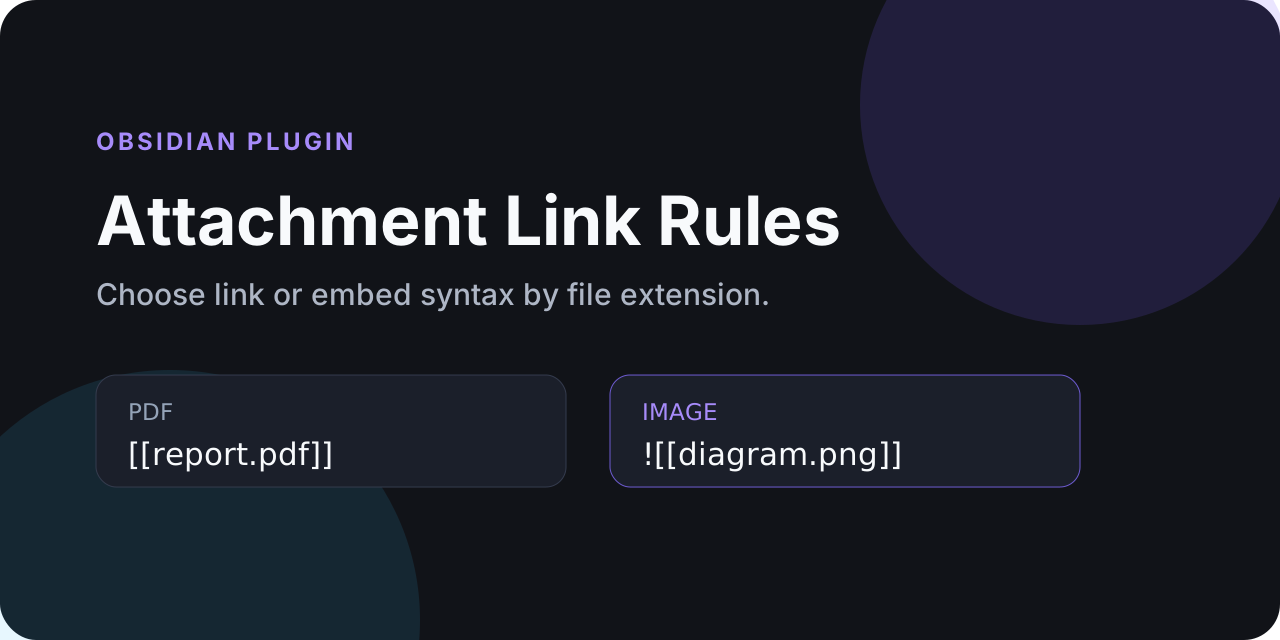
Choose whether dropped attachments become normal links or embeds based on their file extension.
A PDF can land as [[report.pdf]] while an image still lands as ![[diagram.png]]. Native attachment storage, filenames, destinations, and the user's Wiki link or Markdown link preference remain intact.
Highlights
- PDF and office files default to normal links without
!. - Images, audio, and video default to embeds with
!. - Configure extension lists in the settings screen.
- Unlisted extensions retain the syntax generated by the app.
- Works with external file drops and native vault-file drops because storage stays native.
- Uses public APIs only and does not modify existing notes or attachments.
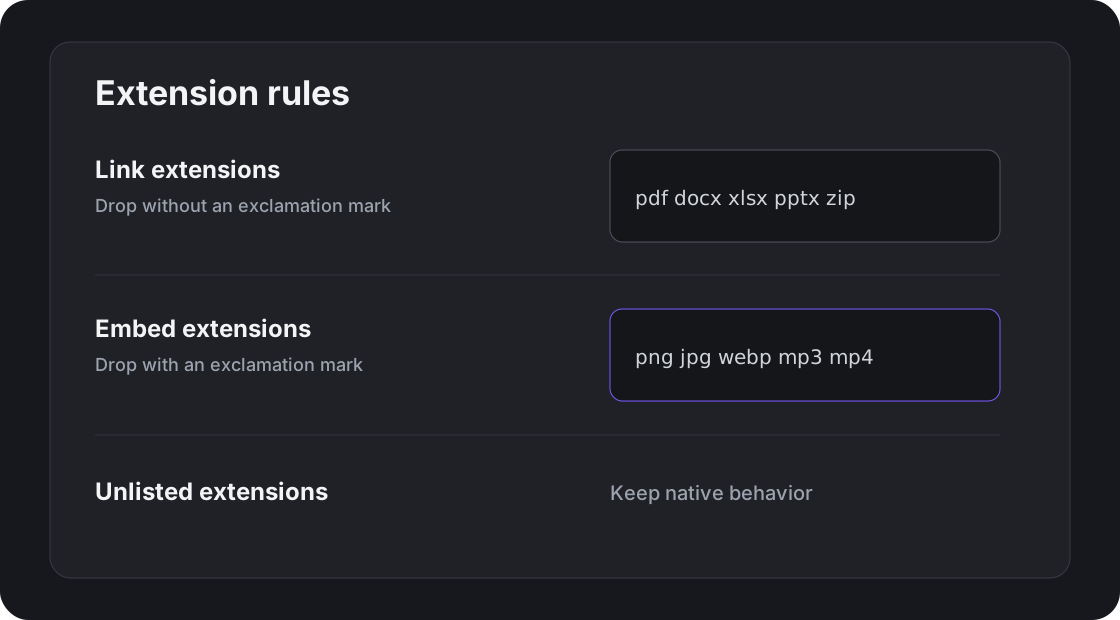
Default rules
Normal links: pdf doc docx xls xlsx ppt pptx zip 7z rar
Embeds: png jpg jpeg gif webp svg avif bmp mp3 wav m4a ogg flac mp4 webm mov
If an extension appears in both lists, the normal-link rule wins. Extensions are case-insensitive and may be separated by spaces or commas.
How it works
The app performs its normal drop operation first, including choosing the attachment folder, resolving duplicate filenames, and generating Wiki or Markdown link syntax. The plugin then inspects only the newly inserted text and adds or removes the leading ! according to the configured extension rules.
This avoids private editor internals and avoids reimplementing attachment storage.
Installation
Install from the Community directory when available, or copy the three signed release artifacts for a manual test-vault installation. No package manager or external service is required at runtime.
Community plugins
After the plugin is accepted into the Community directory:
- Open Settings → Community plugins → Browse.
- Search for Attachment Link Rules.
- Install and enable it.
Manual installation
Copy these release assets into .obsidian/plugins/attachment-link-rules/ inside a test vault first:
main.jsmanifest.jsonstyles.css
Restart the app or reload community plugins, then enable Attachment Link Rules.
Usage
Drag an attachment into an open Markdown note as usual. The app stores the file and inserts its normal link. The plugin then applies the configured rule to the newly inserted syntax:
- dropping
report.pdfproduces[[report.pdf]]with the default settings; - dropping
diagram.pngproduces![[diagram.png]]; - dropping an unlisted extension keeps the native result.
The same rule engine supports Wiki links and Markdown links. Existing links elsewhere in the note are left untouched.
Configuration
Open Settings → Attachment Link Rules:
On Obsidian 1.13 and later, these options are also indexed by the built-in settings search. Older supported versions continue to use the same settings through the legacy-compatible interface.
- Link extensions removes the leading
!. - Embed extensions ensures the leading
!is present. - Unlisted extensions keep native behavior.
- Restore defaults resets the two lists.
Development and verification
npm install
npm run lint
npm run typecheck
npm test
npm run build
npm run community:check
npm run sync:test-vault
npm run smoke:test-vault
npm run check runs the complete local source and Community preflight. GitHub Actions are intentionally not required; the repository's deterministic gate is documented in Local validation. Current Community scorecard findings and their disposition are recorded in Community scorecard notes.
The test-vault sync refuses paths outside the Windows-local obsidian-test-vault plugin folder and refuses the main Syncthing vault.
Privacy and security
The plugin performs no network requests, collects no telemetry, and does not read attachment contents. Live network access exists only in the development-time Community uniqueness checker.
See SECURITY.md for reporting guidance.
Release
The release tag must equal manifest.json.version. Each release contains exactly:
main.jsmanifest.jsonstyles.css
See community submission notes and CHANGELOG.md.
License
MIT © 2026 Viggo Meesters.
For plugin developers
Search results and similarity scores are powered by semantic analysis of your plugin's README. If your plugin isn't appearing for searches you'd expect, try updating your README to clearly describe your plugin's purpose, features, and use cases.