by Markos Narinian
Distinguish agent-authored notes with a banner and explorer dot.
Iris Companion
Spot agent-authored notes at a glance in Obsidian.
| Dark theme | Light theme |
|---|---|
 |  |
Features
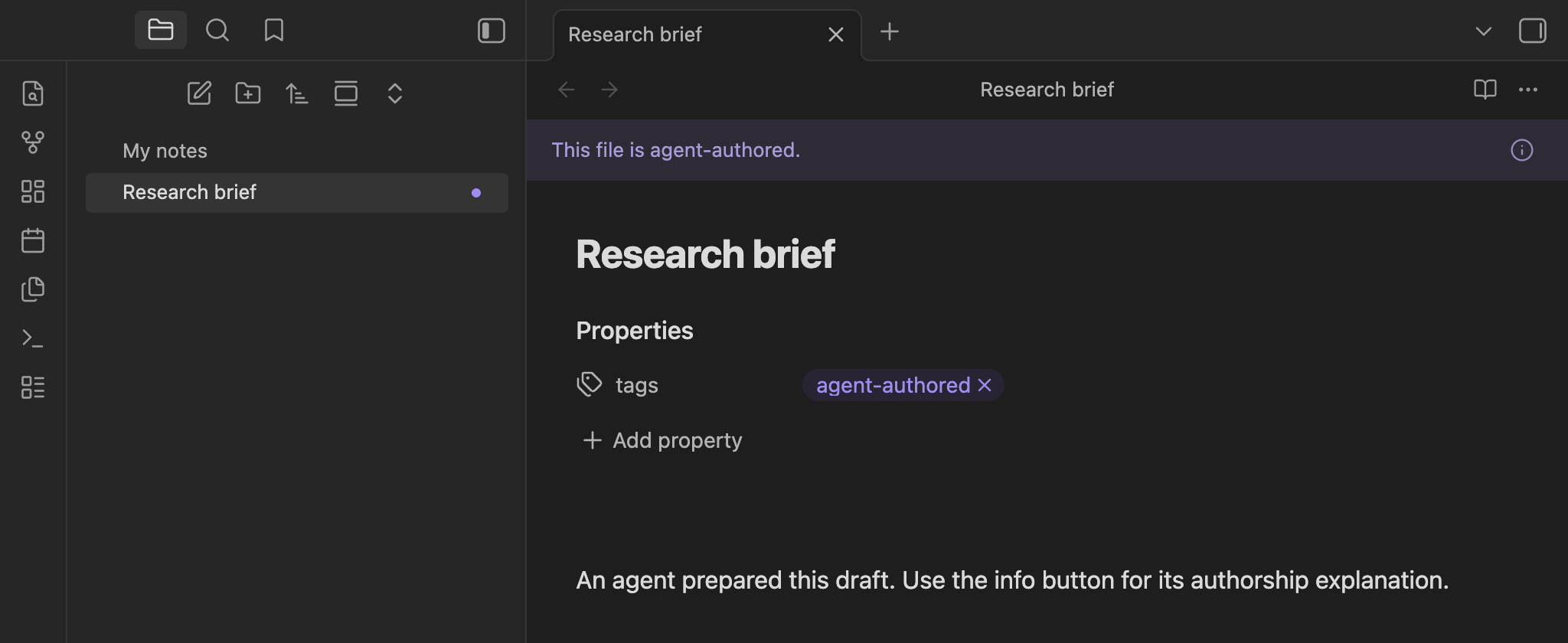
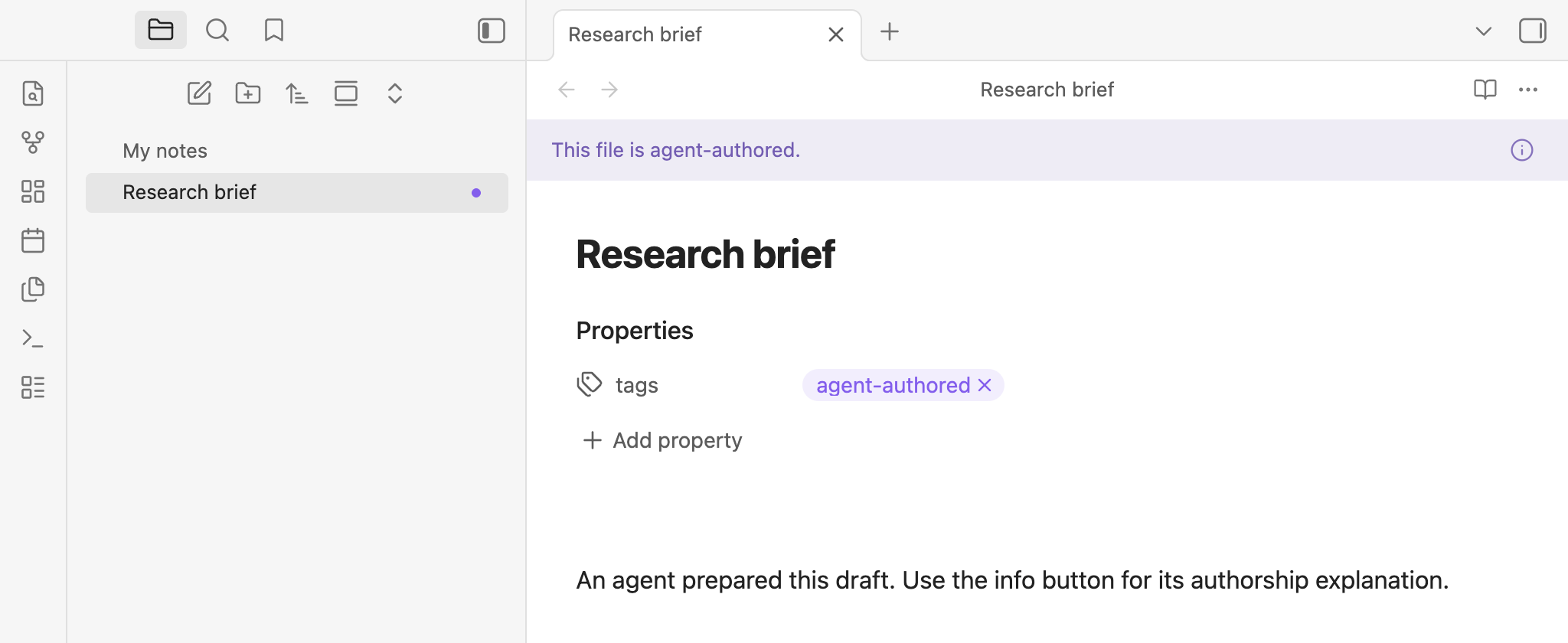
- Recognize the note you're reading. A compact banner identifies agent-authored files in reading and editing views. Its info button explains why it appears.
- Find them in the explorer. Right-aligned dot markers use your theme's accent color and work alongside Color Tags.
- Choose your indicators. Toggle the banner and explorer markers independently in Settings → Iris Companion.
- Keep your vault private. No network requests or telemetry. Notes change only when you run a tagging command.
Tagging notes
Add #agent-authored inline or agent-authored to the note's tags property. Nested tags such as #agent-authored/reviewed also qualify; matching is case-insensitive. Tags inside code do not count. Iris uses explicit tags, not AI detection.
Two command-palette actions edit file properties only:
- Iris Companion: Add agent-authored tag to file properties adds the exact root tag without duplicating it or removing existing nested tags.
- Iris Companion: Remove agent-authored tag from file properties removes the root tag and all its descendants, preserving unrelated tags and properties.
Neither command changes inline tags or the note body. A matching inline tag will keep the indicators visible after property tags are removed. Obsidian may reformat YAML when updating properties.
Install locally
Requires Obsidian 1.8.7+. Not yet listed in the community directory.
- Build from source using the commands below.
- Copy
main.js,manifest.json, andstyles.cssinto<vault>/.obsidian/plugins/iris-companion/. - Enable Iris Companion in Settings → Community plugins.
Development
Use Node.js 22.12+ or 24+ and a separate development vault.
npm ci
npm test
npm run lint
npm run build
npm run dev rebuilds on changes. Reload Iris in your development vault to test updates. See Obsidian's plugin tutorial for setup guidance.
For releases and community-directory submission, see Publishing.
License
MIT. Build tooling is adapted from the official Obsidian sample plugin (0-BSD).
For plugin developers
Search results and similarity scores are powered by semantic analysis of your plugin's README. If your plugin isn't appearing for searches you'd expect, try updating your README to clearly describe your plugin's purpose, features, and use cases.