by yujia
Move the current note to a folder in one click: a button in the note header opens a menu of your favorite preset folders, in your order, with aliases. Updates links. Works on mobile.
Quick Move
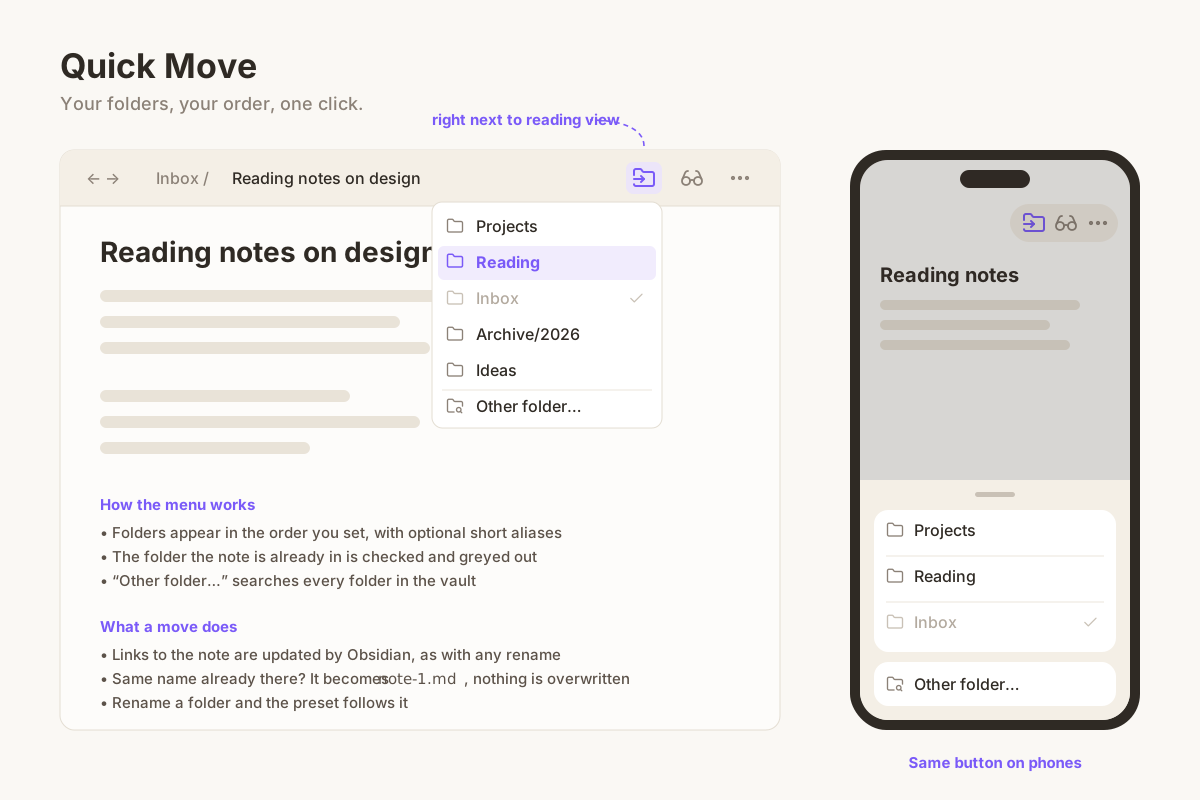
Moving a note in Obsidian means right-click → Move file to… → type the folder name, every time, even though most notes end up in the same handful of folders.
Quick Move puts a Move to… button in the note header, right next to the reading-view button. Click it and you get a menu of your folders, in your order. Pick one and the note moves.
Features
- Your own list of folders. Add them in settings, reorder them with the
up/down arrows, and give long paths a short alias (
Areas/Reading/2026→Reading). - Where the note is now is shown with a check mark and greyed out.
- Other folder… at the bottom of the menu searches every folder in the vault, for the occasional one-off move. It doesn't depend on the core Files plugin, so it still works if you use another file explorer.
- Links stay intact. The move goes through Obsidian's own rename, so with Automatically update internal links on, every link to the note is updated.
- Nothing is overwritten. If the target folder already has a note with the
same name, the moved note becomes
name-1.mdand a notice tells you. - Rename a folder in the vault and the preset follows it.
- Works on phones and tablets. The same button sits in the mobile header and the menu opens as a bottom sheet.
- A command, Quick Move: Open move menu, for a hotkey or the mobile toolbar.
- English and Chinese interface, following Obsidian's language.
Use cases
- Triage an inbox: read a note, send it to Projects, Reading or Archive in one click.
- File notes on your phone without digging through the folder tree.
- Keep a short list of today's active folders at the top of the menu.
Install
Search for Quick Move in Settings → Community plugins, or copy main.js,
manifest.json and styles.css from the latest release into
<vault>/.obsidian/plugins/quick-move/.
Then open Settings → Quick Move and add your folders.
License
MIT
For plugin developers
Search results and similarity scores are powered by semantic analysis of your plugin's README. If your plugin isn't appearing for searches you'd expect, try updating your README to clearly describe your plugin's purpose, features, and use cases.