Sprint Familiar
approvedby Heidi Andersén
A research sprint timer that ends by recording what changed in your argument: claims written, sources linked, assumptions marked, questions opened, paths ruled out. - This plugin has not been manually reviewed by Obsidian staff.
Sprint Familiar
A timed research sprint for Obsidian that ends by recording what changed in your argument.
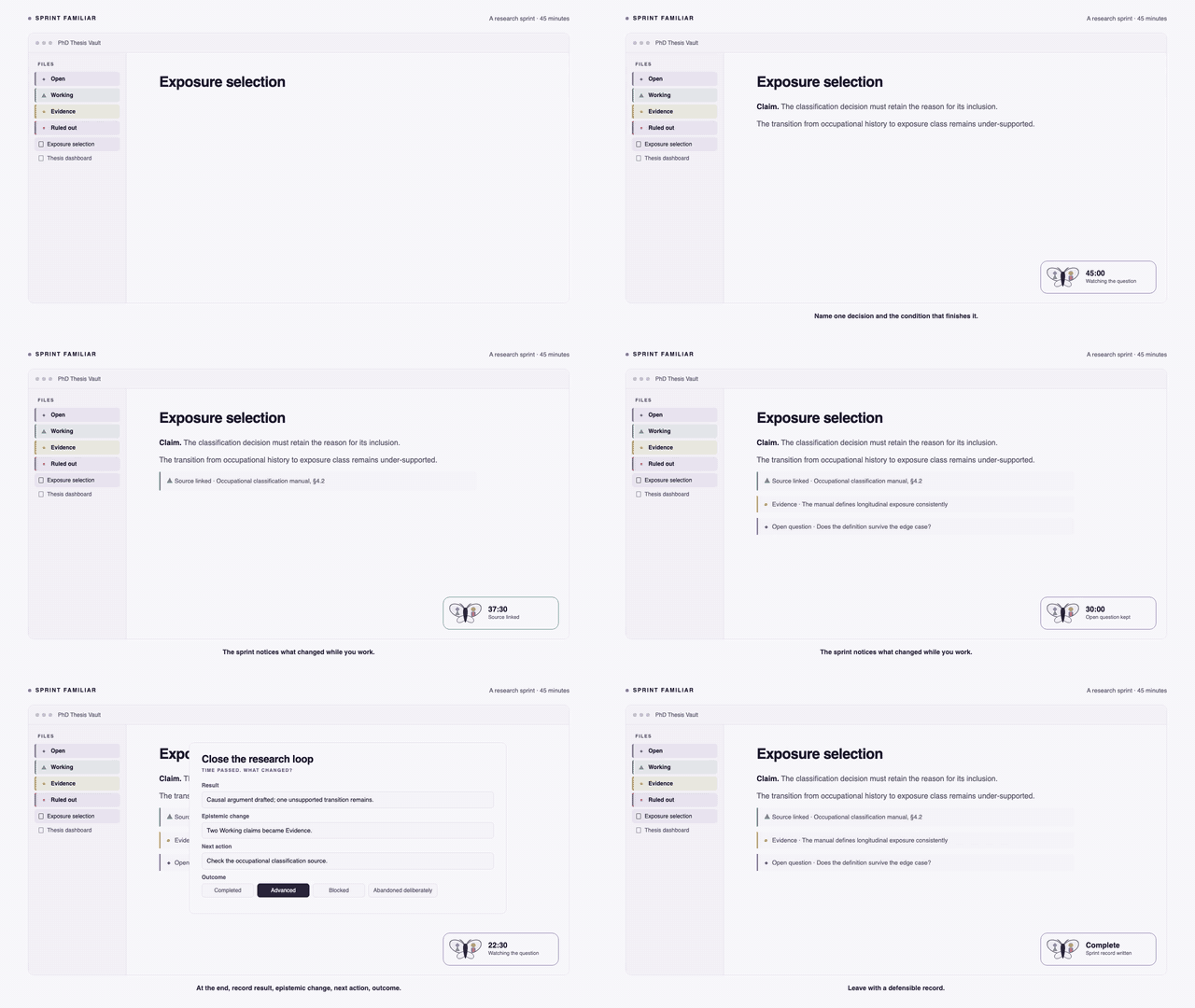
Most focus timers record that you worked. This one records what the work concluded. You start a sprint by naming one research decision and the condition that finishes it, you work, and at the end you write down what changed: which claims you wrote, which sources you linked, which assumptions you made visible, which questions you opened, and which paths you ruled out. Each reviewed sprint becomes a Markdown note in your vault.
A small companion sits in the corner and reacts to those events while you work. It is there to make the record feel worth keeping, not to score you.
What it does
- Starts nothing without a finish condition. A sprint needs one decision to work on and a definition of done.
- Watches for epistemic events while you write: claims, sources, assumptions, open questions, and closed alternatives.
- Ends in a review that you fill in, then writes a dated Markdown record.
- Writes daily and weekly summaries from those records.
- Never moves your notes. See the boundary below.
The boundary
The plugin reads your notes and writes only its own records. It has no rename or move calls anywhere in the source, so it can never reclassify a note or move one between folders. That judgement stays yours.
It makes no network requests of any kind. There is no telemetry, no account, and no external service. Everything stays in your vault, on your machine.
Commands
| Command | What it does |
|---|---|
| Start research sprint | Name the decision and the finish condition |
| Open current sprint | Show the controls for a running sprint |
| Pause or resume current sprint | Stop the clock without losing the session |
| Finish current sprint and review | Record what changed, then write the note |
| Abandon current sprint deliberately | End without a record, on purpose |
| Open sprint dashboard | Recent records and totals |
| Write today's sprint summary | Roll up the day |
| Write this week's sprint summary | Roll up the week |
Settings
Sprint length (1 to 240 minutes, default 45), where sprint records and summaries are written, and whether the companion appears as a note overlay or in the status bar.
Install
From Obsidian: Settings → Community plugins → Browse → search "Sprint Familiar".
Manual: download main.js, manifest.json and styles.css from the latest release into <vault>/.obsidian/plugins/sprint-familiar/, then enable it in Community plugins.
Build from source
npm install
npm run build      # typecheck, then bundle to main.js
npm run dev        # watch mode
npm run lint       # the same checks the community store runs
Releases are cut by the Release workflow, which builds from source and publishes the assets with artifact attestations. Maintainer notes on regenerating the walkthrough GIF live in docs/walkthrough.md.
Background
Sprint Familiar comes out of the Epistemic Notes method, which organises research notes by the state of the knowledge in them rather than by topic: what you can defend, what you are still assuming, what is open, and what you ruled out and why. The method works with no plugins at all; this one automates the part the method calls a research changelog, the dated record of when a claim moved and what moved it.
The free vault that ships the method is at vahtian.com.
Licence
Apache-2.0
For plugin developers
Search results and similarity scores are powered by semantic analysis of your plugin's README. If your plugin isn't appearing for searches you'd expect, try updating your README to clearly describe your plugin's purpose, features, and use cases.