PPTX Viewer
unlistedby Viggo Meesters
Open .pptx slide decks as read-only slide text, notes, media, and package diagnostics.
Updated 3mo agoMIT
Slide Deck Viewer
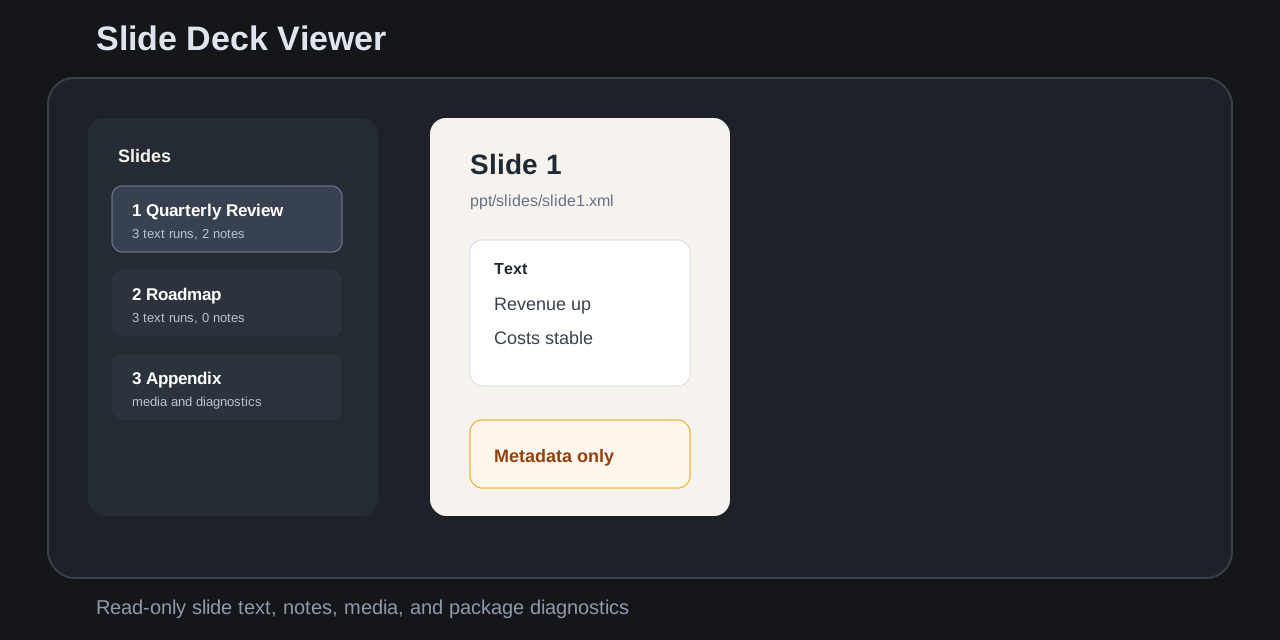
Slide Deck Viewer opens .pptx slide decks as a read-only inspection view inside the app. It focuses on slide text, speaker notes, media metadata, relationships, warnings, and package diagnostics.
Features
- Opens
.pptxfiles from the file explorer with a dedicated read-only view. - Parses the local OOXML zip package in the plugin with no cloud conversion.
- Shows slide navigation, extracted text, speaker notes, media references, and package diagnostics.
- Filters slide text, speaker notes, and media metadata.
- Warns about external relationships, embedded OLE/package content, macros, large decks, encrypted files, and malformed packages.
- Caps large render lists so big decks stay responsive.
Non-goals
- No
.pptlegacy binary support in v0.1. - No editing, saving, annotation, export, or write-back.
- No pixel-perfect PowerPoint rendering.
- No macro, VBA, OLE, or embedded object execution.
- No remote fonts, remote images, network calls, or cloud conversion.
- No launching PowerPoint, Keynote, LibreOffice, or another external viewer.
- No Markdown slide authoring or presentation mode.
Install from release
- Download
main.js,manifest.json, andstyles.cssfrom the matching GitHub release. - Place them in
.obsidian/plugins/slide-deck-viewer/. - Enable
Slide Deck Viewerin Community plugins.
Development
npm install
node scripts/create-fixtures.mjs
npm run build
npm run typecheck
npm test
npm run community:check
Community review checklist
- Plugin id is
slide-deck-viewer. manifest.jsonversion matchesversions.json.- Release tag is exactly
0.1.1, notv0.1.1. - Release includes
main.js,manifest.json, andstyles.css. - Runtime code does not use network, clipboard, shell, eval, write-back, or external app launch APIs.
- Manifest description avoids restricted product-name wording.
- Styles avoid
!important. - The viewer is read-only and handles unsupported decks gracefully.
License
MIT
For plugin developers
Search results and similarity scores are powered by semantic analysis of your plugin's README. If your plugin isn't appearing for searches you'd expect, try updating your README to clearly describe your plugin's purpose, features, and use cases.