by suffername
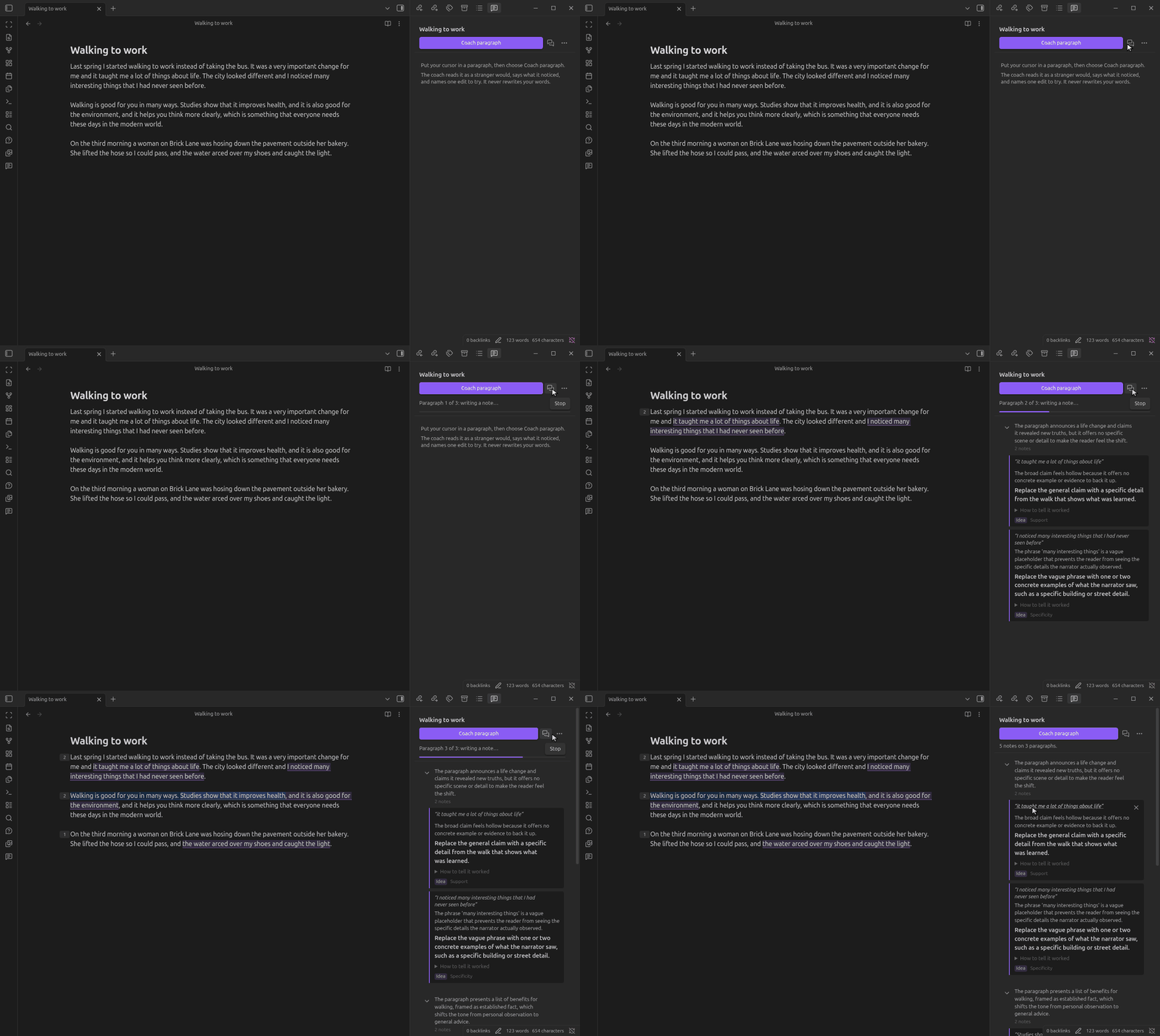
An editor's notes on your paragraphs: what a reader notices, the craft card that fits, and one edit to try. Never rewrites your prose.
Writing Better
An editor's notes on your paragraphs. It points at the words a reader stumbles on and names one edit to try. It never rewrites you.
What it does
- Reads like a stranger. For each paragraph, it says in one or two sentences what a reader takes from it.
- Points at your words. Each note quotes the exact words it is about, and the editor marks them.
- Names one edit. A note says what the words do to a reader, then names one edit to try first. The edit comes from a bank of 170 craft cards.
- Stays quiet when a paragraph works. A paragraph with nothing to fix gets its summary and no notes.
- Never writes your prose. A code check refuses any note that gives you a replacement sentence. The words stay yours.
- Runs on your machine. It uses a language model on a server you choose, such as Ollama. The card search runs inside Obsidian.
Use it
- Put your cursor in a paragraph.
- Run Coach this paragraph from the command palette, the editor menu, or the Writing notes panel.
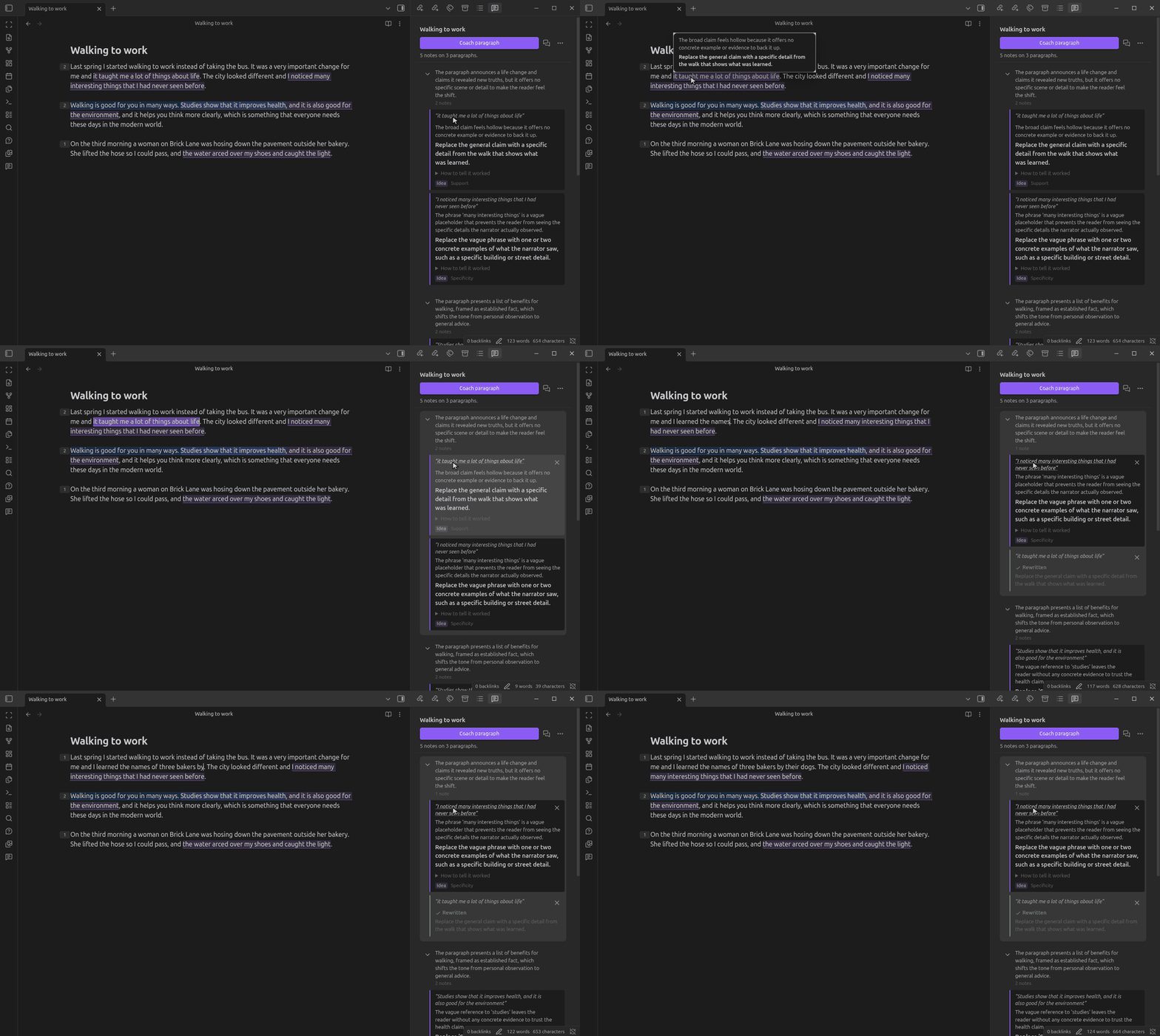
- Read the notes in the panel. Click a quote to go to its words.
- Rewrite the words, or dismiss the note.
To coach a whole note, run Coach this note. It skips any paragraph it has already coached and not changed since, so you can run it again after you edit. Stop ends a run after the step in progress.
What a note holds
| Part | What it tells you |
|---|---|
| Quote | The exact words the note is about. |
| Diagnosis | What those words do to a reader. |
| Move | The one edit to try first. |
| Check | How to tell, without the coach, whether the edit worked. |
| Level | Idea, structure or line. An idea note comes first, because a line edit assumes the idea is settled. |
The marks in the editor take their colour from the Level. A number beside each coached paragraph counts its open notes, and a tick means the paragraph reads well.
When you change the quoted words, the note shows Rewritten. Clear done notes removes those notes.
In the editor and the panel
| Action | Result |
|---|---|
| Hover a mark | Shows the diagnosis and the move. |
| Click a mark | Selects its note in the panel. |
| Click a quote in the panel | Selects the words in the editor. |
| ↑ and ↓ in the panel | Move between notes. |
| Enter / Delete in the panel | Go to the words / dismiss the note. |
| Coach again (↻ on a group) | Coaches that one paragraph afresh. |
You can give hotkeys to Go to the next writing note and Go to the previous writing note.
Settings
| Setting | What it does |
|---|---|
| Server address | Any server with an OpenAI-compatible API. The default is Ollama at http://127.0.0.1:11434/v1. |
| Model name | The model on that server. A larger model notices more. |
| API key | Only if your server needs one. Obsidian keeps it in secret storage on this device. |
| Embedding model | A one-time download, about 244 MB. It finds the cards that fit a note. |
The Writing notes panel tells you when the server cannot be reached or the embedding model is missing, and what to do about each.
Privacy and network use
- The paragraph you coach, the paragraph before it and the note's title go to the server in Server address, and to nothing else. With a local server, they do not leave your machine.
- The embedding model downloads once, on request, from Hugging Face (EmbeddingGemma) and jsDelivr (the ONNX runtime). Each file is checked against a SHA-256 hash. No writing is sent.
- The notes are kept in the plugin's data, keyed by file path. The plugin never writes to your notes.
Requirements
- Obsidian 1.13 or later, on desktop.
- A language model server, such as Ollama with
ollama pull gemma3:4b.
Credits
- Card search: EmbeddingGemma, under the Gemma terms of use, run by Transformers.js.
- The craft cards were written for this plugin.
License
MIT
For plugin developers
Search results and similarity scores are powered by semantic analysis of your plugin's README. If your plugin isn't appearing for searches you'd expect, try updating your README to clearly describe your plugin's purpose, features, and use cases.