Azure DevOps Linker
approvedby srz2
Quickly format an Azure DevOps issue tag as a link to you Azure DevOps instance.
Azure DevOps Linker
This is an Obsidian plugin enables the ability to quickly add:
- A web based url for a Azure DevOps issue
- A local based uri for a local folder for an issue
Commands Available
- Link Azure issue
This will link to a Azure instance a given Azure Issue
- Link Azure DevOps issue (default instance)
This will link to the default Azure DevOps instance of a given Azure DevOps Issue
- Link Azure issue to info
This will link to a local file for a given Azure Issue. If the path does not exist, it will be created
Note: The Local issue path must be set Note: You can optionally change the "main" file. It defaults to "_Info"
Demo
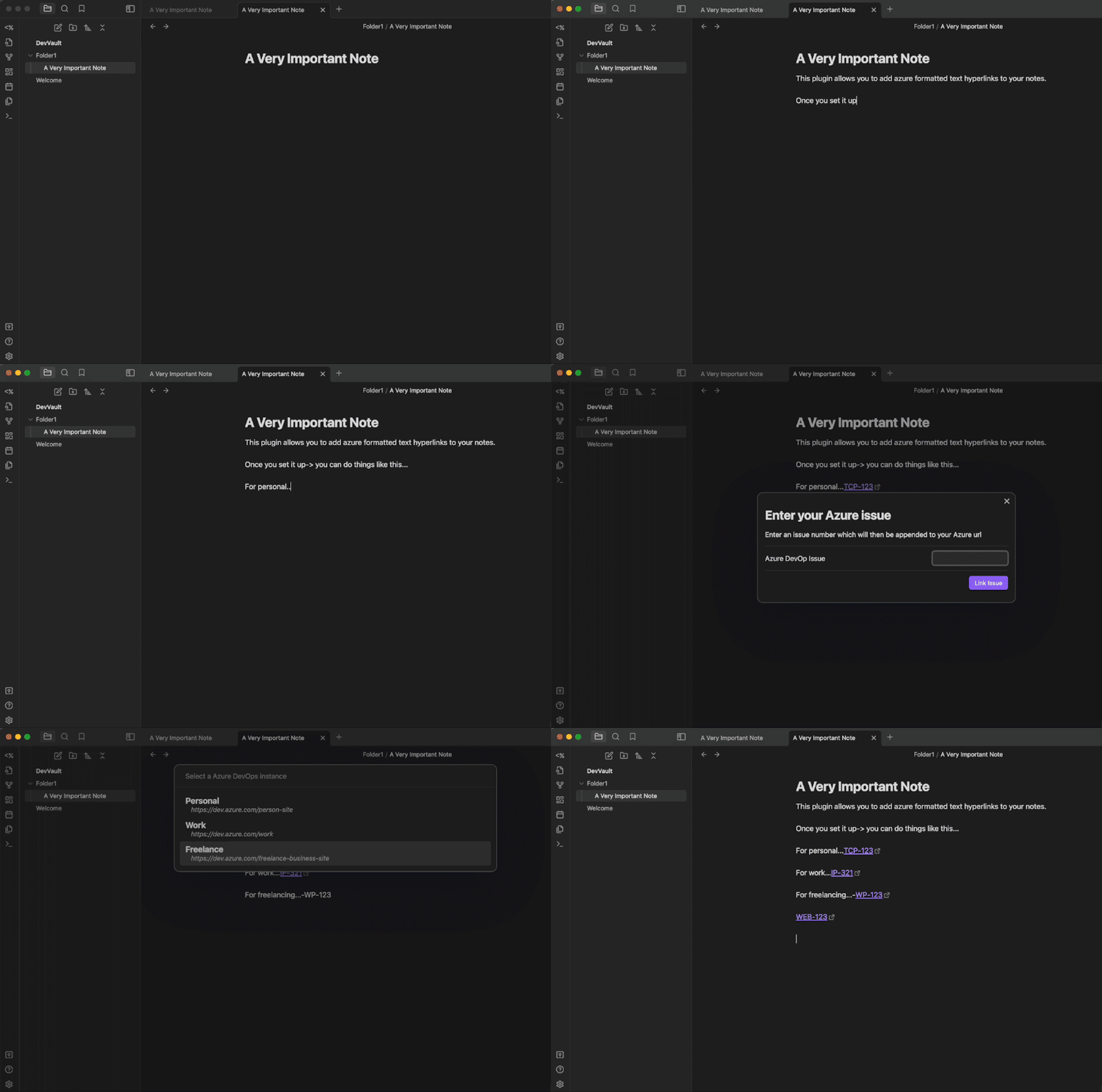
How to use
- Configure needed settings:
- Your Azure DevOps Instance URL
- This should include the instance name and the organization name (i.e. - dev.azure.com/orgName)
- List of projects and desired abbrivation
- Your local directory which is the root of issues
- Optionally configure the default "main" file
- Your Azure DevOps Instance URL
- Highlight your Azure Issue in the editor and invoke the Link Azure DevOps issue or Link Azure DevOps issue to info command
- Additionally, you can have nothing selected and have a modal ask you for the Azure Issue
- The text will be replaced with the appropriately linked Azure issue
Additional Notes
- You are able to have as many Azure instances as you'd like
- There is only 1 location for the 'in obsidian' local folder
- Unless a specific instance is selected in settings, the default Azure instance used will be the first listed item
Donate
If you like this plugin and find it useful, please consider donating!

For plugin developers
Search results and similarity scores are powered by semantic analysis of your plugin's README. If your plugin isn't appearing for searches you'd expect, try updating your README to clearly describe your plugin's purpose, features, and use cases.