by Kevin Yan
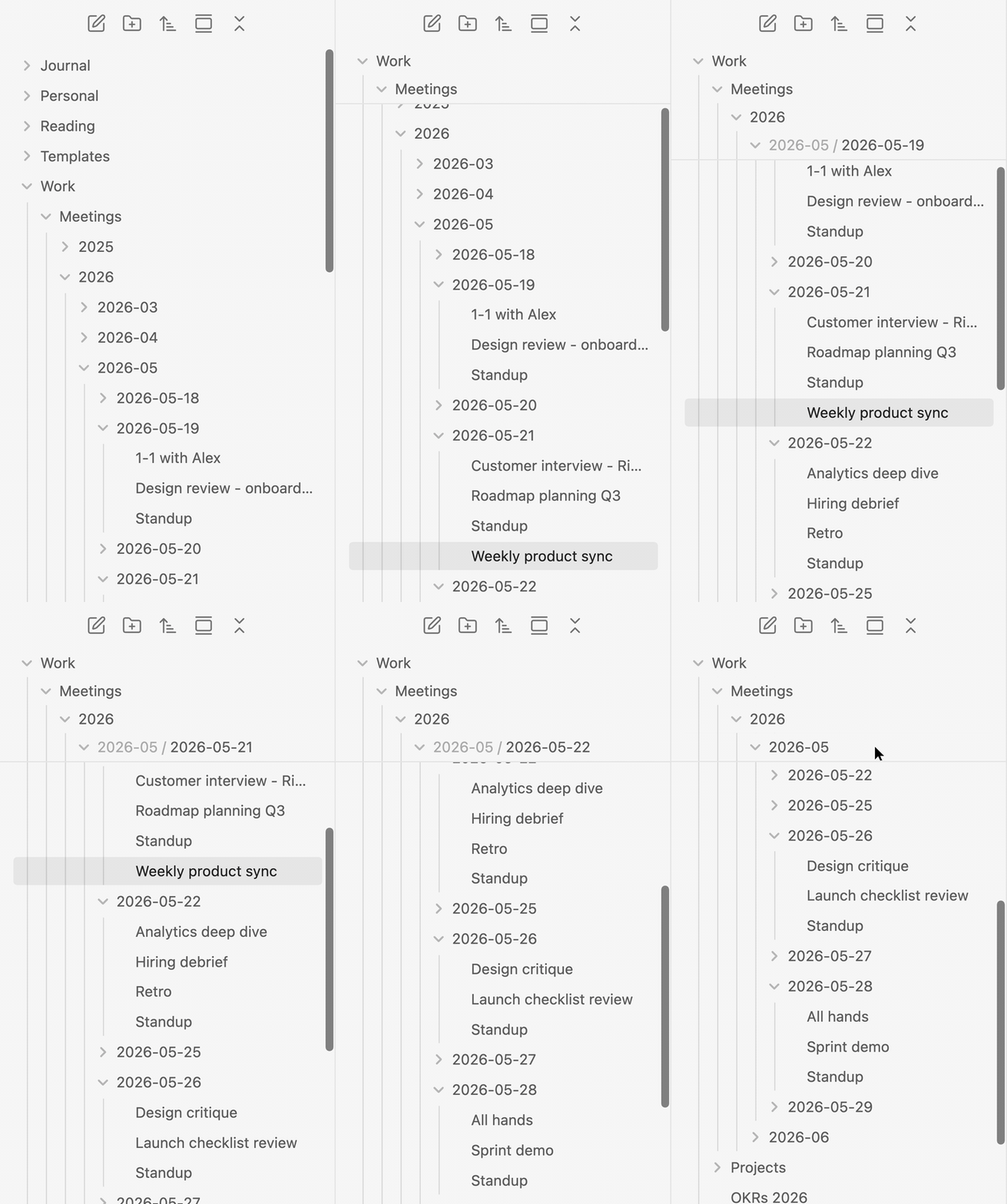
Keeps parent folders pinned at the top of the file explorer while you scroll, merging deep paths into one row and highlighting a folder's range from its indent guide.
Sticky Folders
Keep parent folders pinned at the top of Obsidian's file explorer while you scroll,
so you always know which folder you are in, even five levels deep.





English · 简体中文
Why
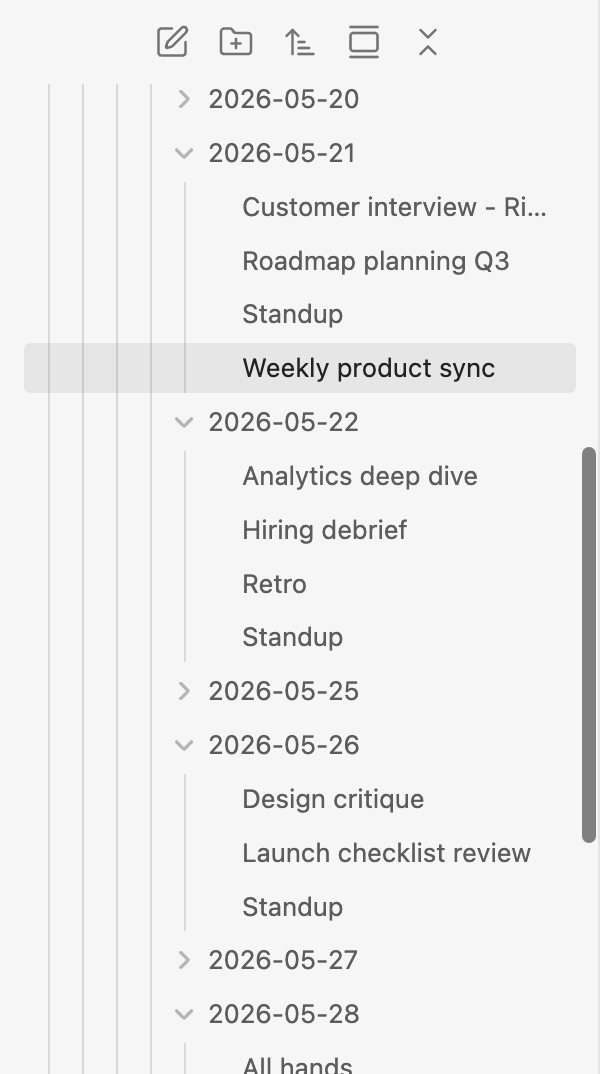
Vaults organised by date or project get deep fast: Work / Meetings / 2026 / 2026-05 / 2026-05-21 / …. Scroll a little and the folder rows slide out of view. All that is left are indent lines that don't say where they lead.
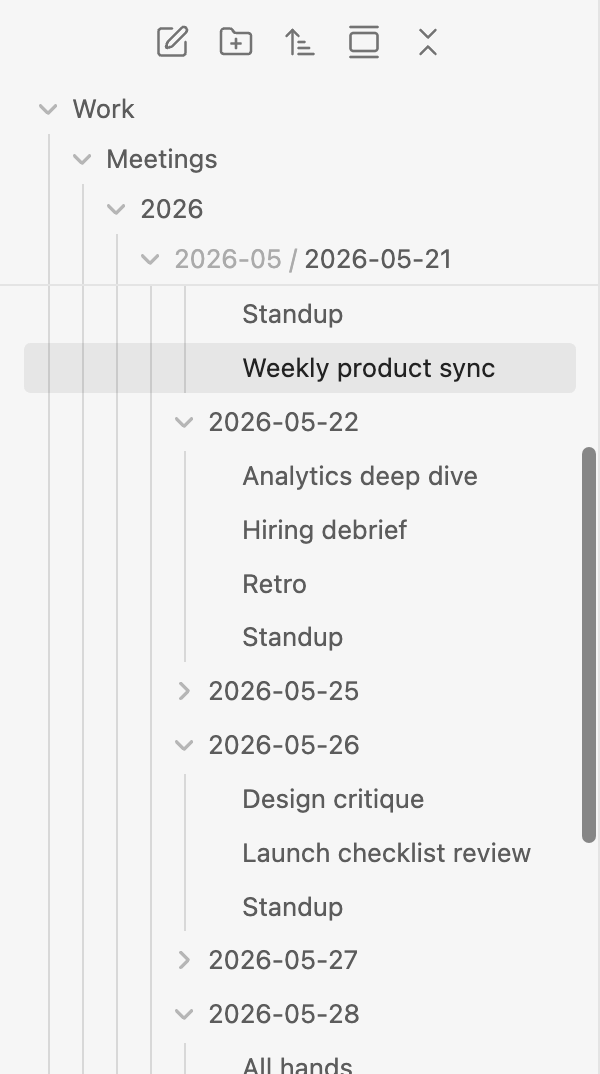
Sticky Folders keeps those parents on screen, the way VS Code's sticky scroll keeps the enclosing function visible.
| Without Sticky Folders | With Sticky Folders |
|---|---|
 |  |
Features
Pinned parent folders
Every open parent folder of the top of the list gets its own pinned row, indented like the tree below it. When a folder ends, the next one pushes its row up. Pinned rows are copies of the real rows, so your theme's styling carries over.
A row limit that never runs out of room
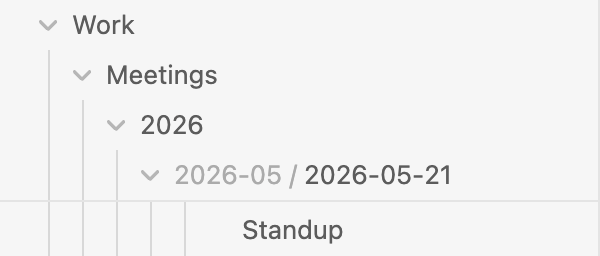
Choose how many rows may be pinned (1–8, default 4). When nesting goes deeper, the extra levels share one row: grey names for the merged parents, the folder you are in at the end. You decide which end merges.
| Merge deeper levels into the last row (default) | Merge outer levels into the first row |
|---|---|
 | 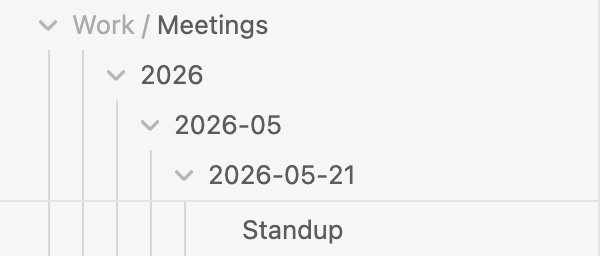 |
Indent guide hints
Hover an indent guide, a pinned row or a grey name. The folder's whole range lights up in your accent colour and its name turns bold, both in the tree and in the pinned rows. Click the guide to collapse that folder.
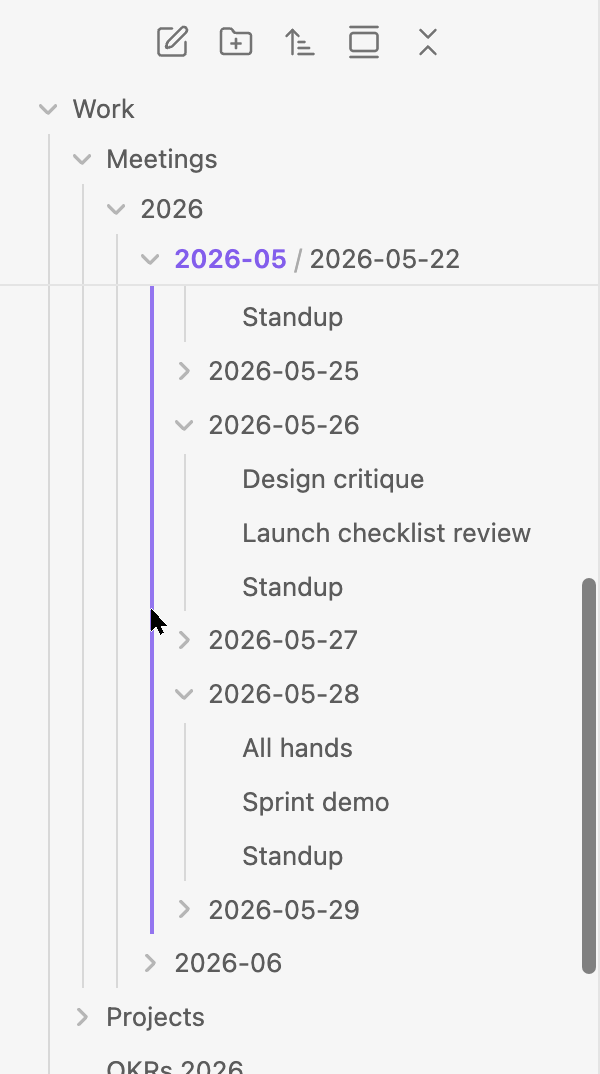
Collapse in place
Click a pinned row, or one of the grey names, to collapse that folder. The list scrolls so the folder sits right under the rows that stay pinned, so you don't lose your place. Right-click a pinned row for Obsidian's usual folder menu.
Fits in
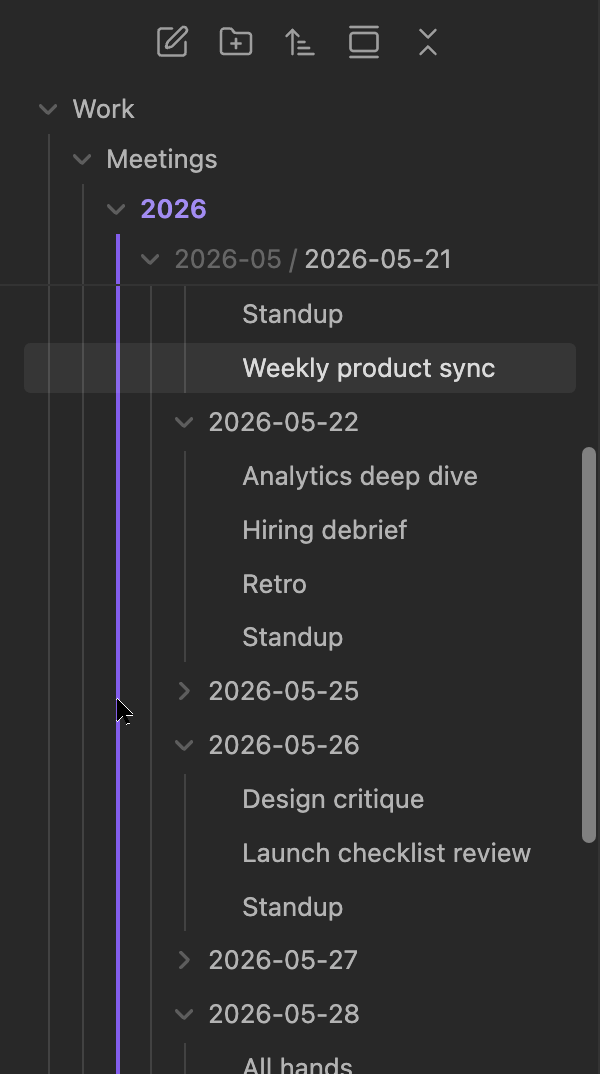
- Light and dark themes.
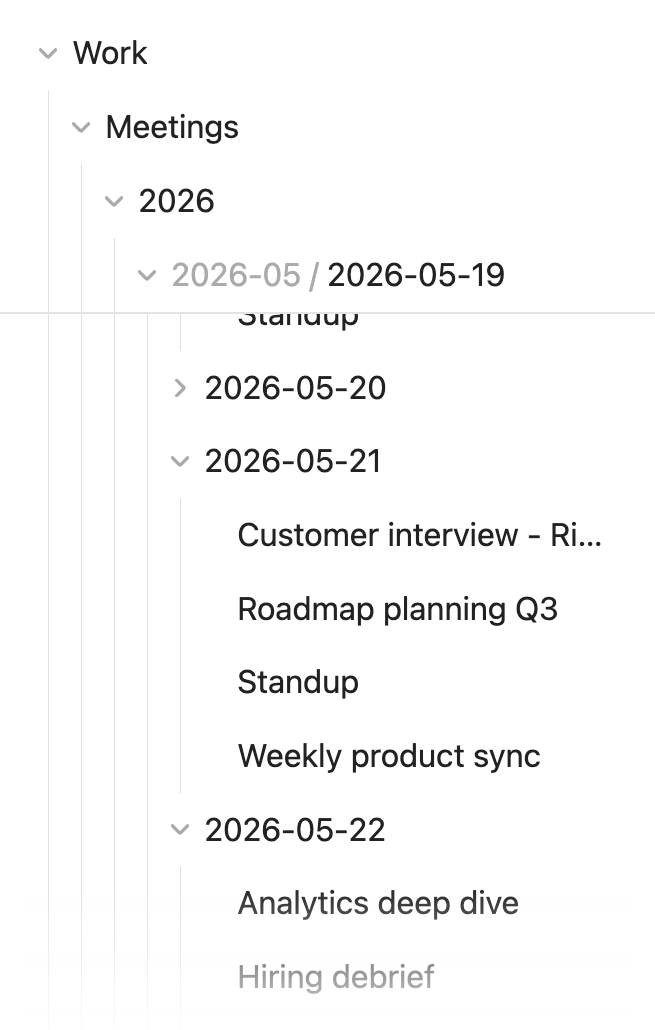
- Works on mobile: tap a pinned row to collapse it. Hover hints need a mouse.
- Settings in English and Chinese, following Obsidian's language.
| Dark theme | Mobile |
|---|---|
 |  |
Installation
Community plugins
Sticky Folders is not in Obsidian's community plugin list yet. Until it is, install it with BRAT or by hand.
With BRAT
- Install and enable BRAT from Settings → Community plugins.
- Run BRAT: Add a beta plugin for testing from the command palette.
- Enter
Tuosang/obsidian-sticky-foldersand choose the latest version. - Enable Sticky Folders under Settings → Community plugins.
BRAT also keeps the plugin up to date.
Manually
- Download
main.js,manifest.jsonandstyles.cssfrom the latest release. - Put them in
<your vault>/.obsidian/plugins/sticky-folders/. - Reload Obsidian and enable Sticky Folders under Settings → Community plugins.
Usage
There is nothing to set up. Open the file explorer and scroll.
| Action | What happens |
|---|---|
| Scroll the file list | Open parent folders stay pinned at the top |
| Hover an indent guide, pinned row or grey name | The folder's range is highlighted and its name turns bold |
| Click a pinned row or grey name | That folder collapses and stays in place |
| Click an indent guide | That folder collapses (can be turned off) |
| Right-click a pinned row | Obsidian's folder menu for that folder |
| Scroll over the pinned rows | The list scrolls as usual |
Settings
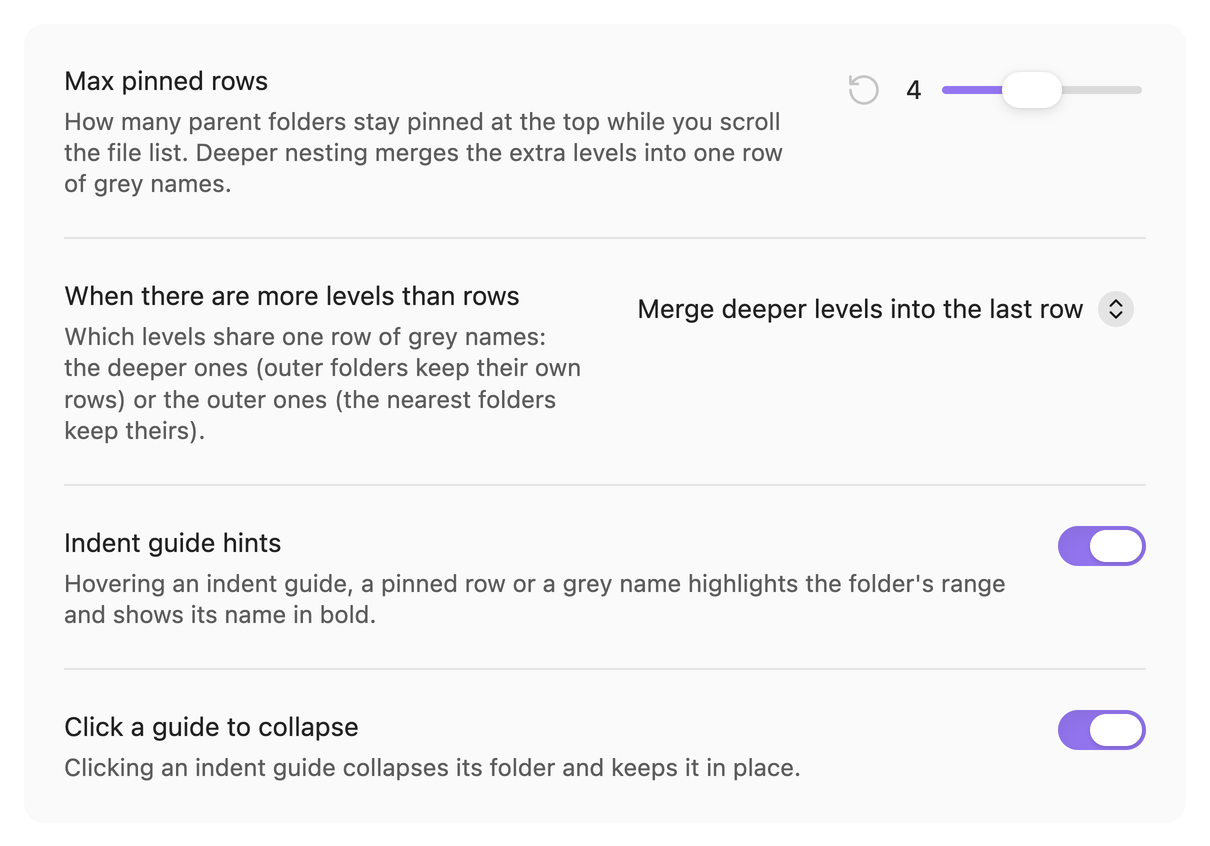
| Setting | Default | What it does |
|---|---|---|
| Max pinned rows | 4 | How many rows may be pinned at once (1–8) |
| When there are more levels than rows | Merge deeper levels into the last row | Which end shares one row of grey names |
| Indent guide hints | On | Highlight a folder's range and bold its name on hover |
| Click a guide to collapse | On | Clicking an indent guide collapses its folder |
The settings also show up in Obsidian's settings search, and each one has a button to reset it to the default.
Compatibility
- Obsidian 1.13 or later. Developed and tested on Obsidian 1.13.7 on macOS, and in Obsidian's mobile layout.
- Works with Obsidian's core file explorer. Plugins that replace it with a view of their own are not supported.
- Tested with the default theme (light and dark) and a community theme. If a theme looks wrong, please open an issue with a screenshot.
Known limitations
- Dropping a file onto a pinned row does nothing. Drop it on the folder's real row, or on a subfolder below.
- Hover hints need a mouse. On touch screens, tap the pinned rows instead.
- The plugin relies on how Obsidian builds its file explorer, which a future Obsidian release could change. If something breaks after an update, please open an issue.
Privacy
Sticky Folders makes no network requests and collects no data. It reads the file explorer on screen and never opens your notes. Its settings are stored in the plugin's own data.json.
How it works
- Pinned rows are copies of the real folder rows, drawn in a zero-height
position: stickyelement at the top of the explorer's scroll container. Wheel, trackpad and touch scrolling over them keep working. - Obsidian only renders the rows on screen, but the parents of those rows always stay in the page. The plugin measures them directly, so it never scans your vault.
- Collapsing uses the explorer's own folder items without animation, so the folder can stay in place. If Obsidian changes that internal API, the plugin falls back to clicking the real row.
Development
git clone https://github.com/Tuosang/obsidian-sticky-folders.git
cd obsidian-sticky-folders
npm install
npm test          # layout logic in src/layout.ts
npm run lint      # the Obsidian community directory's ESLint rules
npm run build     # type-check and bundle into dist/
npm run dev       # rebuild on every change
To copy each build into a vault, put the vault's path in a git-ignored .vault file or set STICKY_VAULT.
To release, run npm version patch (it updates manifest.json and versions.json), then push the commit and a tag equal to the version without v, for example git push && git push origin 0.1.1. GitHub Actions builds the plugin and drafts a release with the three files.
Changelog
See CHANGELOG.md.
Feedback
Bug reports and ideas are welcome in issues, in English or Chinese.
Acknowledgements
Inspired by the sticky scroll in Visual Studio Code.
License
MIT © 2026 Kevin Yan
For plugin developers
Search results and similarity scores are powered by semantic analysis of your plugin's README. If your plugin isn't appearing for searches you'd expect, try updating your README to clearly describe your plugin's purpose, features, and use cases.