by UmmBition
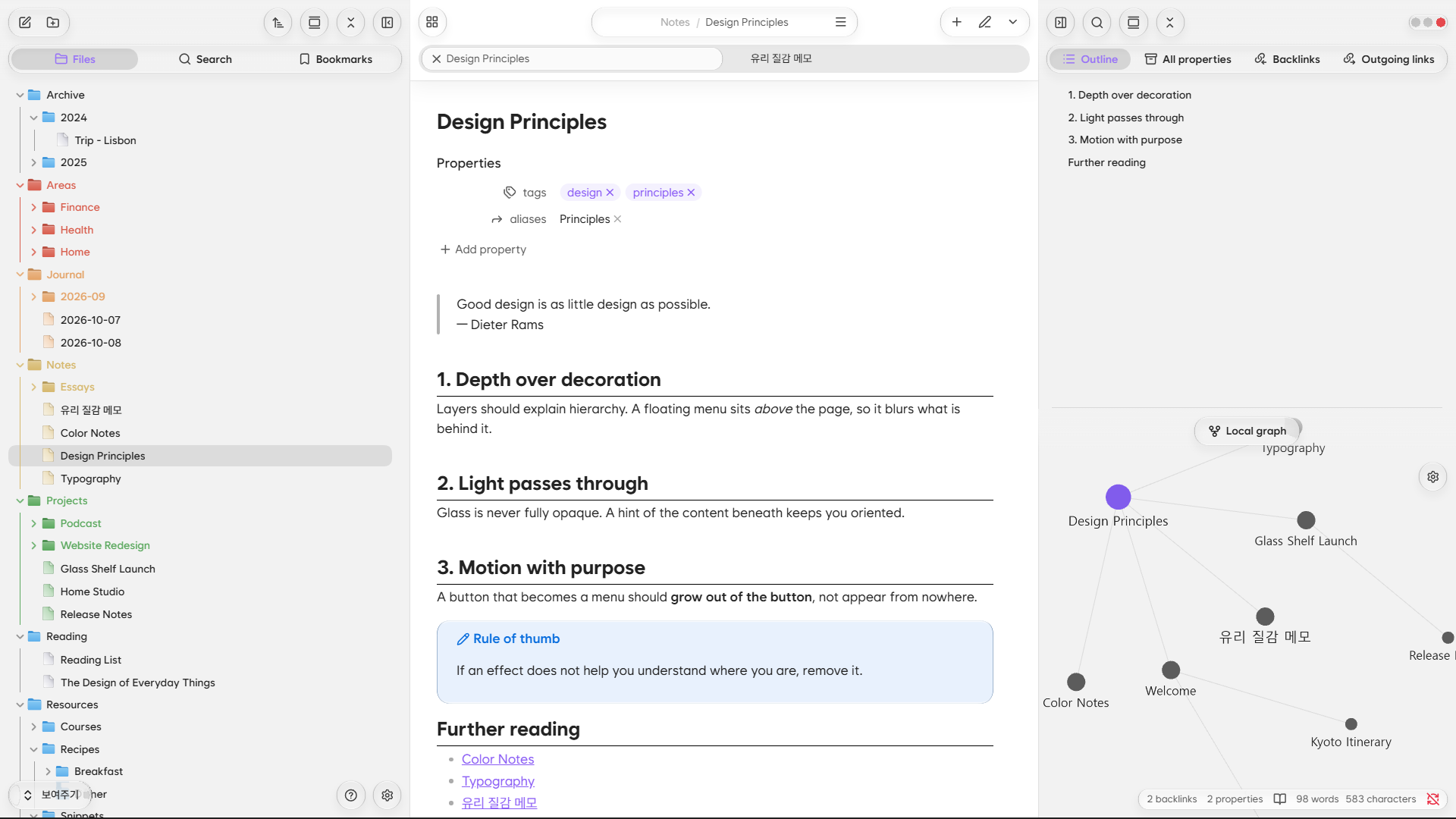
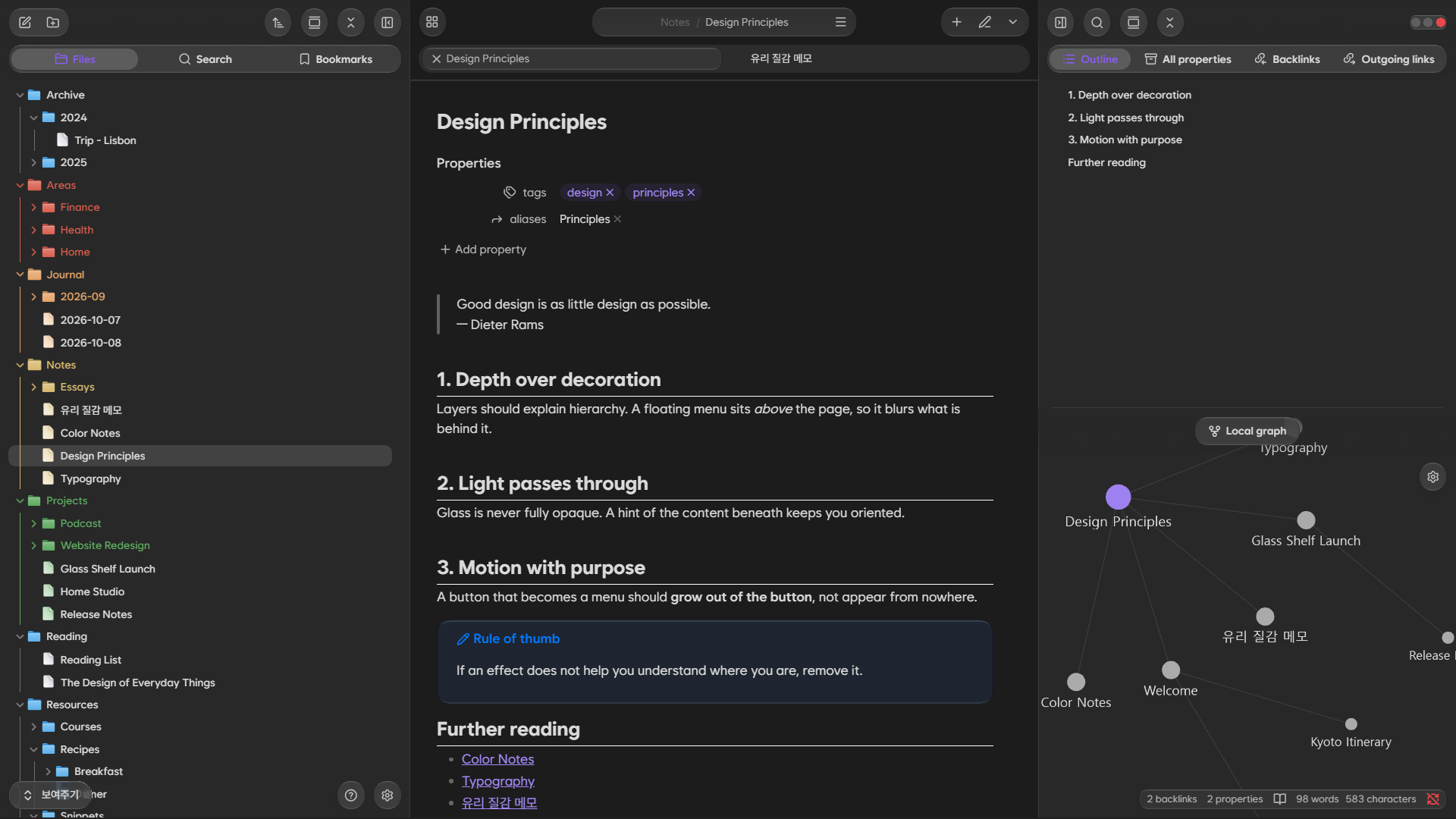
Companion plugin for the Glass Shelf theme. Adds refraction, morphing menus, a lens effect for panel tabs, a tidier pill-shaped layout and glass settings. Requires the Glass Shelf theme.
Glass Shelf Companion
English · 한국어
Companion plugin for the Glass Shelf theme. It adds button layout, motion and refraction on top of the glass surfaces drawn by the theme.
Requires the Glass Shelf theme. This plugin only runs while Glass Shelf is the active theme. With any other theme it changes nothing.
Features
Layout
- Sidebar more-options menus, back/forward and reading-mode buttons in the tab bar, and in-tab menu buttons, rearranged into pills
- Shows the current note's "folder / file" path above the tab bar
- Collapses the tab bar to the note title when you scroll down (Safari style)
- Lens effect when switching panel tabs, wide tab bar, tab names
- Shrinks the Windows and Linux window controls into small dots

Glass
- Glass opacity in 11 steps (0–10)
- Tint: none, accent color, Obsidian purple, or a custom color, with 10 strength steps
- Refraction that bends the background along glass edges
- Popups that match menu translucency, or opaque popups
- Morphing animation where a button grows into its menu, plus press effects
Details
- Task checkbox style and color
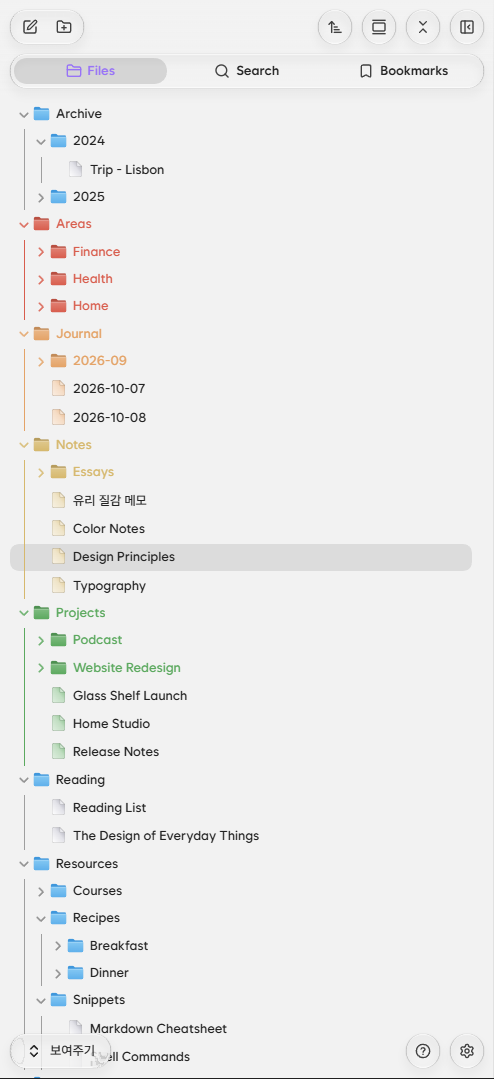
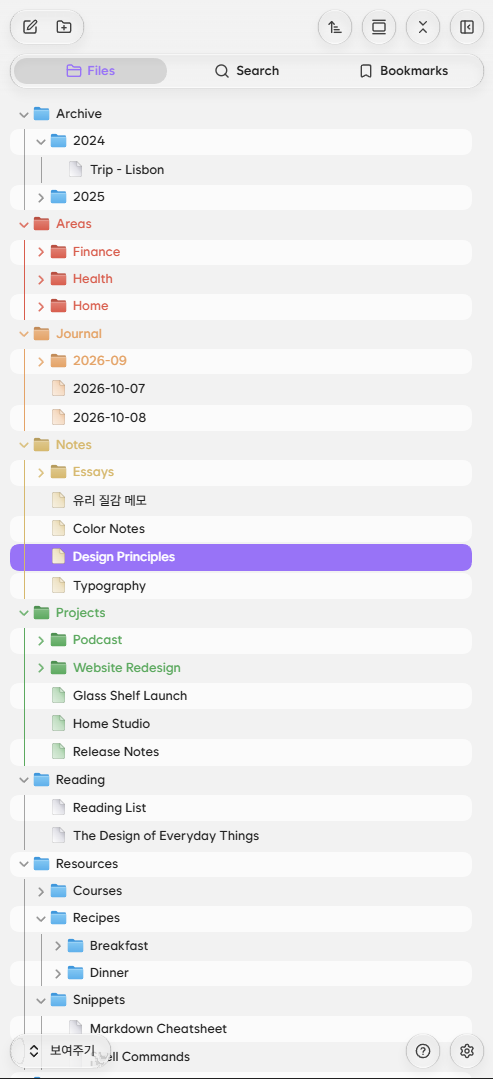
- Folder icon color in the file explorer and a per-folder color palette
- Striped rows in the file explorer, line under headings
- iOS-style colors for toggles and sliders
Plugin integration
- Kanban: restyled to match Glass Shelf
What moves where
With the plugin on, a few buttons move. They work the same; only their place changes.

Ribbon menu
- The vertical ribbon on the left is hidden, and its buttons are gathered into the grid button (Ribbon menu) at the far left of the editor tab bar, just left of back/forward.
- The buttons shown and their order follow Settings → Appearance → Ribbon menu.
- When the left sidebar is closed, the button that opens it also appears at the far left of the tab bar.
- On tablets, the vault, help and settings buttons are added to the end of the ribbon menu. Phones are unchanged.
Sidebar panels
- Panel buttons such as New note, Sort and Collapse all in the file explorer move into the more-options (···) button in the panel tab bar.
- With the wide tab bar setting on, those buttons are laid out in a row instead of the ··· button.
Editor tab bar
- Back / forward: left side of the tab bar
- Reading / editing toggle: right side of the tab bar, left of the tab list button
- More options (≡): inside each tab. With the path display on, it moves into the path pill above the tab bar.
Tab settings
Change them in Settings → Community plugins → Glass Shelf Companion.
| Setting | What it does |
|---|---|
| Tab switch effect | A lens that slides between tabs, or a plain accent-colored pill |
| Wide tab bar | Stretches the panel tab pill from edge to edge |
| Show tab names | Puts the name next to each panel tab icon |
| Show path | "Folder / file" path above the editor tab bar |
| Collapse tab bar on scroll | Folds the tab bar when you scroll down |
Installation
- Install and enable the Glass Shelf theme in Settings → Appearance → Themes.
- Install and enable the Glass Shelf Companion plugin in Settings → Community plugins.
Supported platforms
- Built mainly for desktop (Windows) and Android.
- On iPhone and iPad, refraction does not work, so only blur is applied.
- macOS has not been tested thoroughly, so some details may look off.
Privacy
This plugin makes no network requests and only changes the Obsidian interface. It does not read or send your notes.
Support
If you enjoy Glass Shelf, you can support it with a coffee.

License
For plugin developers
Search results and similarity scores are powered by semantic analysis of your plugin's README. If your plugin isn't appearing for searches you'd expect, try updating your README to clearly describe your plugin's purpose, features, and use cases.